
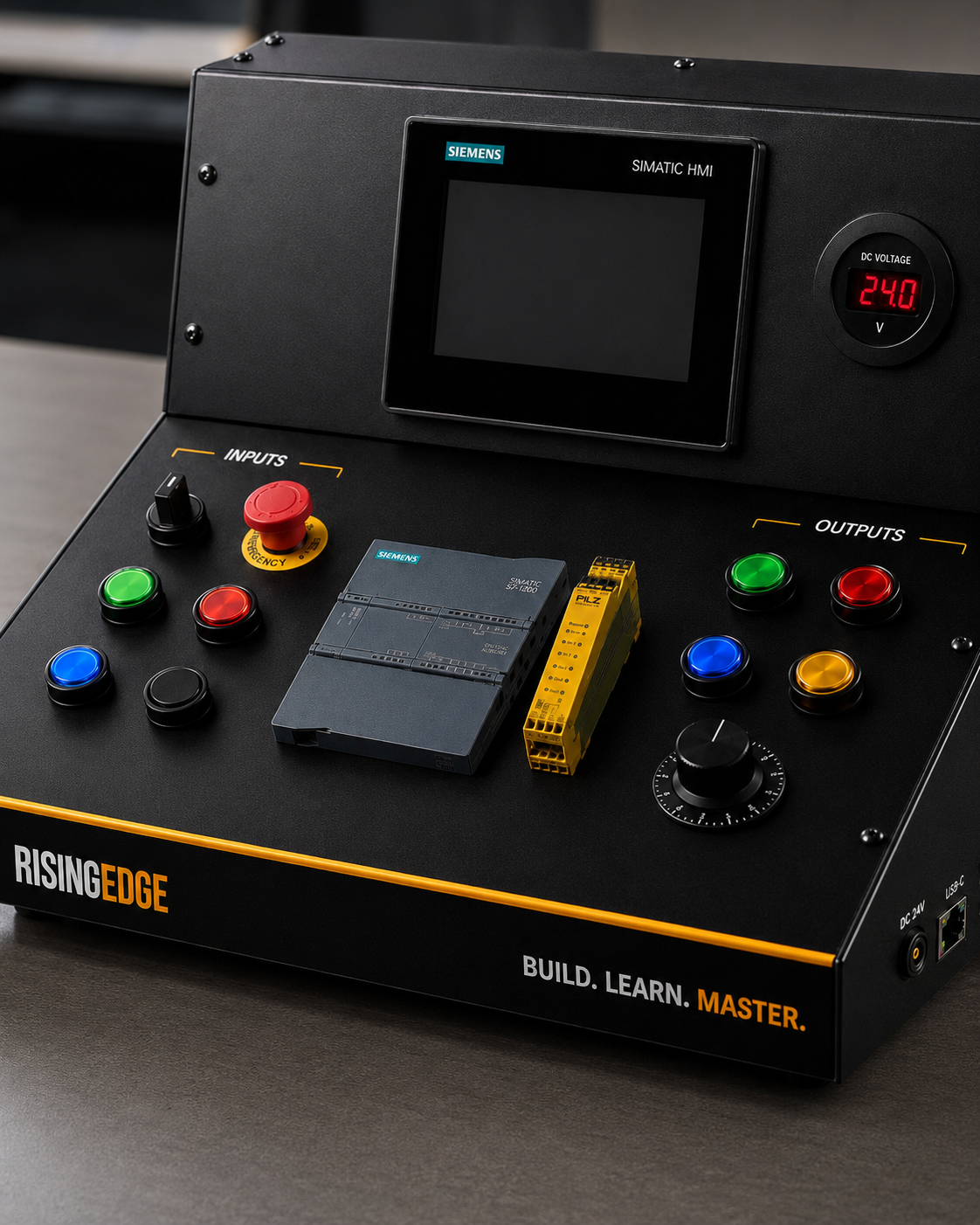
What does PLC stand for?
PLC stands for Programmable Logic Controller.
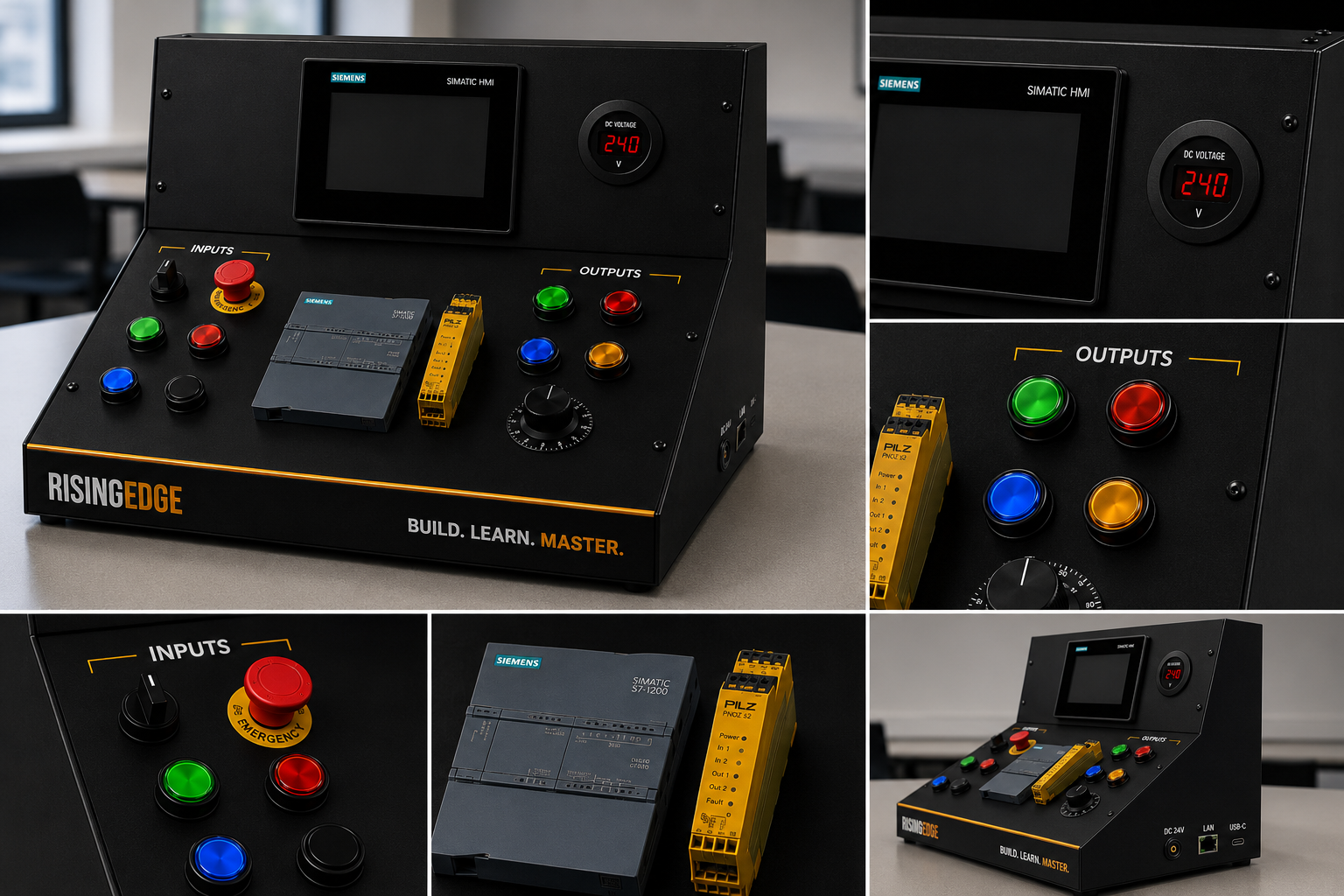
Where are PLCs used?
PLCs are used across industry because they are reliable, repeatable and designed for real production environments.
How does a PLC work?
A PLC works in a fast repeating cycle. It checks what is happening, runs the logic, then updates the outputs.
Read inputs
The PLC checks devices like pushbuttons, sensors, switches and safety circuits.
Run logic
The PLC follows the program written by the engineer.
Update outputs
The PLC controls lamps, relays, motor starters, solenoids and alarms.
What are PLC inputs and outputs?
Inputs are signals going into the PLC. They tell the PLC what is happening in the real world. Common examples include start buttons, stop buttons, selector switches, sensors and safety devices.
Outputs are signals coming out of the PLC. They let the PLC control something. Common examples include indicator lamps, relays, contactors, valves and alarms.
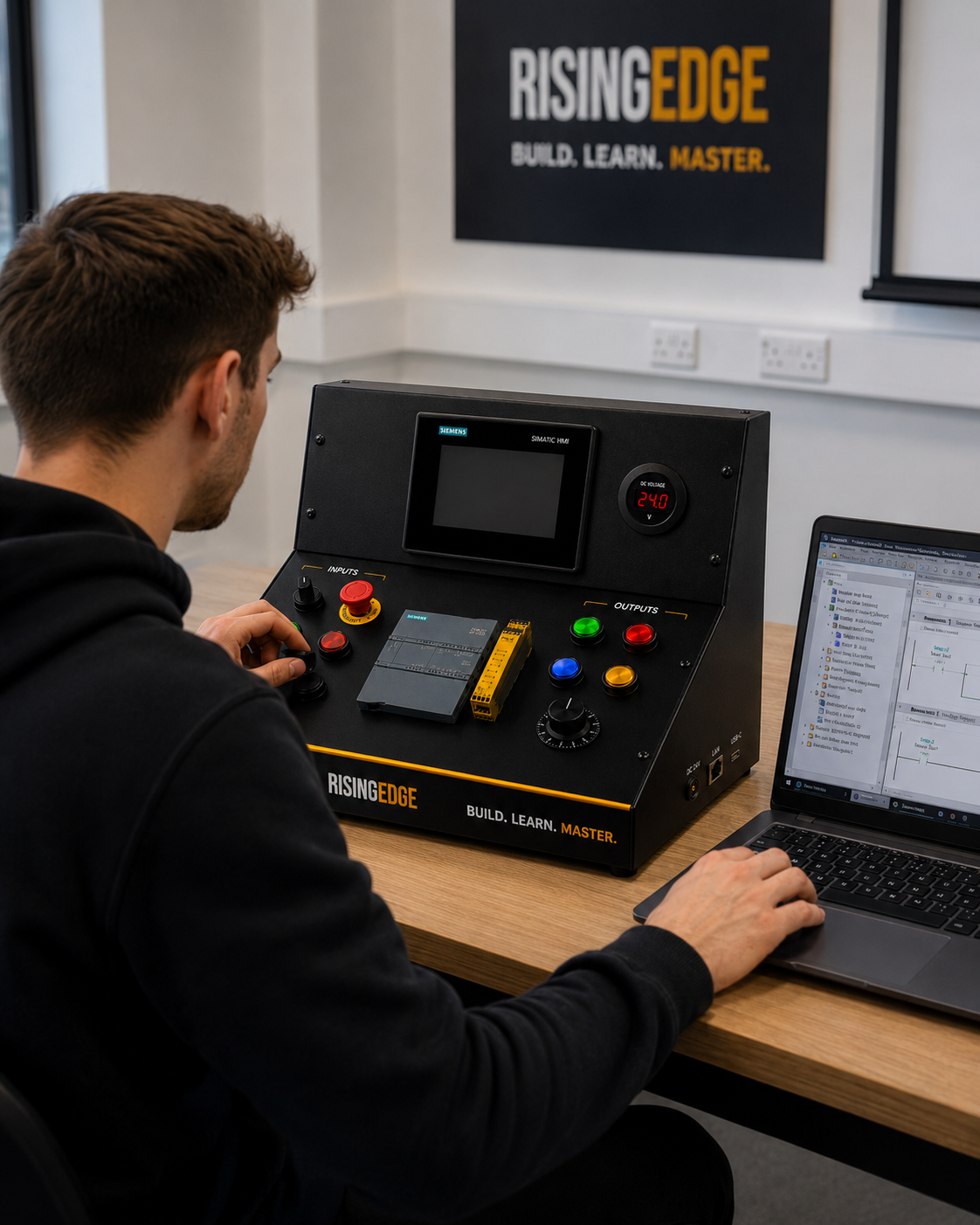
What is PLC programming?
PLC programming is the process of writing the instructions the PLC follows. One of the most common programming styles is ladder logic, which looks similar to electrical control diagrams.
For Siemens PLCs, engineers often use TIA Portal to configure hardware, create tags, write logic, build HMI screens and test automation projects.
How do you learn PLCs properly?
You can learn the theory from videos and tutorials, but real confidence comes from hands-on practice. You need to press inputs, watch outputs change, build logic, make mistakes, test faults and understand the cause and effect.
That is why Rising Edge Automation is building compact PLC training kits using real industrial hardware. The goal is to make serious automation skills feel practical, achievable and exciting.