
What is a PLC memory bit?
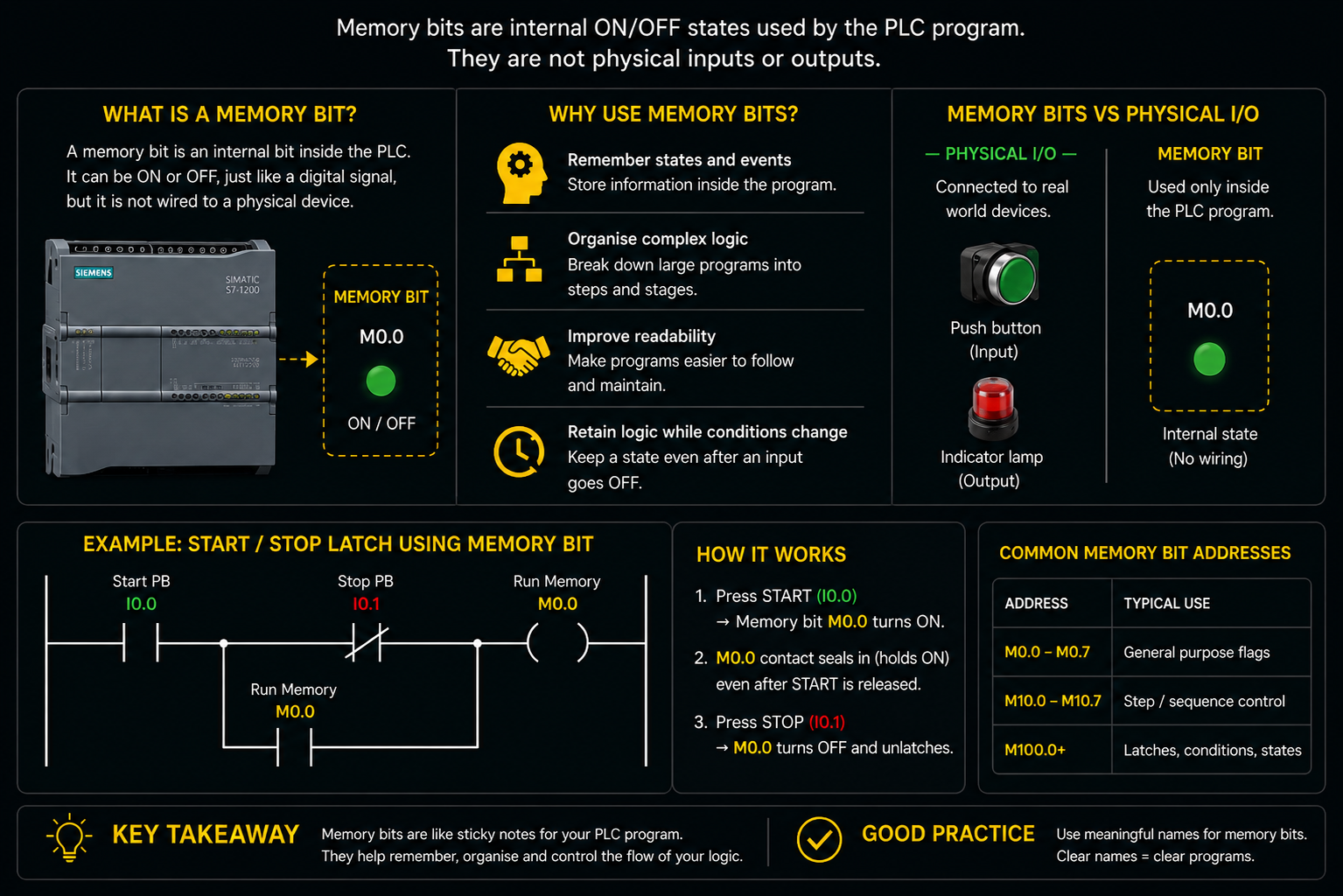
A PLC memory bit is an internal bit used by the PLC program. It can be ON or OFF, just like a digital input or output, but it lives inside the PLC logic rather than being directly connected to a physical device.
You may also hear people call these internal bits, marker bits, internal relays, flags or auxiliary bits. The exact name depends on the PLC platform and software being used.
Why do PLC programs use memory bits?
Memory bits help a PLC program remember conditions, break logic into clearer sections and avoid repeating the same logic over and over.
Memory bits vs physical inputs and outputs
A physical input is linked to a real device, such as a pushbutton or sensor. A physical output is linked to a real device, such as a lamp, relay or valve.
A memory bit is different. It is used inside the PLC program to hold a logical state. It may be controlled by real inputs, and it may later control real outputs, but it is not a field device itself.
How memory bits are used in latch logic
A common beginner use for a memory bit is a latch. The start button turns the memory bit on, and the stop button turns it off. The memory bit can then control an output such as a run lamp or motor command.
This is useful because the PLC only sees the start button while it is pressed. The memory bit lets the program remember the run request after the button is released.
Good memory bit names
Clear names make memory bits much easier to understand. Avoid names that give no meaning, such as M1 or Bit_3, unless you are just testing.
Better names describe the job of the bit.
What should you learn next?
Once memory bits make sense, the next useful step is understanding contacts and coils. These are the building blocks used to read conditions and control outputs in ladder logic.
Why memory bits are useful
A memory bit is an internal software signal. It does not have to be wired to a physical input or output. Engineers use memory bits to remember states, organise logic, create sequence steps and pass information between parts of a program.
For example, a start button may only be pressed for a moment, but the machine needs to keep running after the button is released. A latch can use a memory bit or output state to remember that run command until a stop condition resets it.
Memory bits are powerful, but they need discipline. Poorly named bits such as M1 or Flag2 make programs hard to understand. Clear names such as Auto_Mode_Active or Conveyor_Run_Request make the intention obvious.
Common beginner mistakes
- Treating memory bits like physical outputs. A memory bit is internal; it does not directly switch a lamp, motor or valve.
- Creating lots of internal bits without clear names. This quickly makes the program confusing and hard to fault-find.
- Forgetting to reset latched memory bits. A bit that stays on unexpectedly can keep part of the logic active.
- Using memory bits to hide poor structure. If the logic is hard to follow, adding more bits usually makes it worse.
Frequently asked questions
What is a memory bit in a PLC?
A memory bit is an internal on/off storage point used by the PLC program. It is not a physical input or output, but it can remember a logic condition.
Is a memory bit the same as an output?
No. An output controls a physical device or output channel. A memory bit is internal to the PLC program and is often used to hold logic states or sequence steps.
Why are memory bits useful?
Memory bits are useful for latching, storing machine states, tracking sequence steps, creating internal conditions and making logic easier to organise.
Can memory bits cause faults?
They can cause confusing behaviour if they are used without clear naming or reset logic. A memory bit left on unexpectedly can make a machine appear to behave incorrectly.
Should beginners use lots of memory bits?
Beginners should use memory bits carefully. They are useful, but overusing them can make a program harder to read and fault-find.
What is a latch in PLC programming?
A latch is logic that keeps a bit or output on after the original input turns off. It normally needs a separate reset condition to turn it off safely.